|
Snow enthusiasts everywhere are counting down the days until they can hit the slopes. Both skiing and snowboarding are fun and exciting winter pursuits. But these demanding physical activities also pose high risks. Without proper training, you won't be able to keep up with your friends. Or worse, you'll suffer an injury that'll put you on the sidelines for the whole season. But with proper preparation, ideally starting 6-12 weeks before you hit the mountain, you can improve your balance, coordination and endurance while reducing your risk of injury. Our workout plan will help you get in shape for the season—and stay that way until the snow melts. There are four fitness components that every skier and snowboarder should incorporate into his or her workout plan. Here's what you need to know about each one: 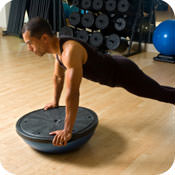 1. Core Training 1. Core TrainingBoth skiing and snowboarding rely heavily on balance and core strength, which help reduce your risk of falls, improve your posture and enhance your performance. Your core comprises your abdominals, obliques, lower back and hips, which you can strengthen with targeted strength training exercises. These muscles also help your body remain stable and balanced during a variety of activities. In addition to strengthening your core muscles, it's a good idea to perform specific balance training exercises. These can range from simple beginner exercises like balancing on one foot to advanced moves involving a stability ball, BOSU ball or balance board. Train your core muscles 2-3 times per week (both pre-season and during the winter), trying at least one balancing exercise per session. Rest for one day between core workouts to allow those muscles to recover and repair. Strengthen your core and improve your balance with any one of these "snow" workouts:  2. Strength Training 2. Strength TrainingBesides using your core, snow sports rely heavily on strong muscles and joints—especially in the lower body. The body mechanics of snowboarding and skiing involve using the knee and hip joints repetitively, which means that the muscles surrounding those joints (hamstrings, quads, glutes, calves, and more) need to be strong and have endurance. Skiers also need upper body strength in the triceps, shoulders, and back because of their use of ski poles. One technique that may help skiers and snowboarders build the both strength and endurance in these muscle groups: Use lighter to medium resistance and a higher number of repetitions to help train your muscles for strength and endurance that these sports require. But "high reps" doesn't mean 50-100 repetitions with three pounds of weight. You should still pick a weight that is challenging enough to fatigue your muscles within 10-15 reps. To help build greater strength and endurance, drop the weight by 20%, for example, after you've reached failure and try to squeeze out a few more reps. Or you could try supersets, which means trying two to three different exercises for the same muscle group in a row (without resting), such as squats followed by lunges followed by a leg press. Strength train these specific muscle groups 2-3 times per week (both pre-season and during the winter). The workouts below feature sport-specific exercises that you can add to a well-rounded strength training program:
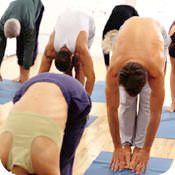 3. Flexibility Training 3. Flexibility TrainingIf exercisers tend to neglect one thing, it's stretching. But flexibility is one of the most important components of your winter sports conditioning program. Proper stretching helps reduce muscle tension, increases your range of motion and protects the joints that are used so often in these sports. Plus, being flexible can directly help you in your fitness endeavors—it improves body awareness, enhances recovery, and may even help you improve your overall form and performance. The most important muscles for skiers and snowboarders to stretch regularly include the hamstrings, quads, hips, calves, IT band, piriformis, and lower back. In addition, the upper back, chest and shoulders should also get attention—especially by skiers. Stretch at least 3-4 times per week (both pre-season and during the winter) after your muscles are warmed up. Ideally, stretching should be a part of every workout and winter outing. The stretching routines below focus on the muscles you'll use throughout the season: 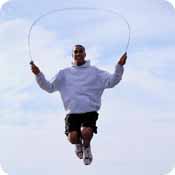 4. Cardiovascular Training 4. Cardiovascular TrainingLast but not least: Don't forget to train your heart and lungs. Cardiovascular (aerobic) exercise helps build the endurance you need to make it through a long day of activity at higher altitudes. When you're in good shape, you'll be more alert, less fatigued and therefore less likely to make a mistake that could result in injury. There's tons of fun activities that can build aerobic endurance—running, swimming, jumping rope, aerobics, sports like soccer, climbing stairs, cycling, kickboxing, and more—and it's a good idea to select a variety of these things for best results. Try a combination of steady-state exercise (where you maintain a constant heart rate during your workout) and intervals (where you alternate between high-intensity bursts like sprints and lower intensity recovery periods). Do cardio 4-6 times per week for 30-60 minutes per session. Long sessions (over 30 minutes) are vital for helping you build the endurance you need for skiing and snowboarding. If you're a beginner, start with fewer days and less time and gradually work your way up. For some ideas, check out these short cardio-videos, which include some plyometric exercises, which increase the agility and explosive power that you need on the slopes.  Putting It All Together Putting It All TogetherIf you want to be a better snowboarder or skier, then sports-specific training is going to help you. The recommendations above may seem like a lot, but they fit in with the general fitness recommendations for all people. Keep in mind that you can do core strength, flexibility and cardiovascular training in a single day or on multiple days—just find a combination that works best for you. Start today and you'll be in excellent shape by the time winter rolls around. That means you'll stay injury-free, keep up with your friends, and not let fatigue prevent you from joining in on the fun. How's that for motivation to stick to a workout program? This article has been reviewed and approved by SparkPeople Coaches (and certified personal trainers), Dean Anderson and Jen Mueller. |