Caring for Your Aging Parents: How Do You Cope?
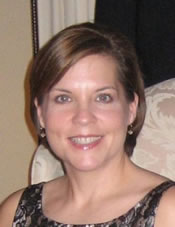
For many, caring for an aging parent is not an issue, but for others it's an all too familiar scenario. With life expectancy on the rise, caring for an aging parent(s) will, in all reality, be a likelihood for a number of us. And I am no exception. For the past 3 years, my husband and I have been caring for his aging parents--age 83 and 88. Their care has become a major part of our lives, especially this past year as both have experienced a major decline in their health.
Three years ago after shuttling our daughter off to college, my husband and I were looking forward to having some empty-nest time--time to spend together. However, those plans have been put on hold for the time being. With his parents advancing age and declining health, coupled with the stress and financial obligations of maintaining a home, they made the decision to sell their home and move closer to us.
So less than 3 months after sending our daughter off, my in-laws sold their home of 55 years. It was a tough transition to leave a place they called home for so many years and to leave life-long friends to move to what might as well have been a foreign country. Fortunately, we were able to find a nice independent living retirement community not too far from our home that fit well within their budget. Being able to bring many of their belongings from their home helped ease some of the anxiety that was to be expected.
The challenges of caring for aging parents can become quite stressful, particularly when one is trying to juggle family life, work, and household duties on top of everything else that life throws our way. So how does one cope with the demands caring for aging parents?
Below is a list of ideas my husband and I have come up with to help make caring for an aging parent just a little easier.
Three years ago after shuttling our daughter off to college, my husband and I were looking forward to having some empty-nest time--time to spend together. However, those plans have been put on hold for the time being. With his parents advancing age and declining health, coupled with the stress and financial obligations of maintaining a home, they made the decision to sell their home and move closer to us.
So less than 3 months after sending our daughter off, my in-laws sold their home of 55 years. It was a tough transition to leave a place they called home for so many years and to leave life-long friends to move to what might as well have been a foreign country. Fortunately, we were able to find a nice independent living retirement community not too far from our home that fit well within their budget. Being able to bring many of their belongings from their home helped ease some of the anxiety that was to be expected.
The challenges of caring for aging parents can become quite stressful, particularly when one is trying to juggle family life, work, and household duties on top of everything else that life throws our way. So how does one cope with the demands caring for aging parents?
Below is a list of ideas my husband and I have come up with to help make caring for an aging parent just a little easier.
- Keep Communication Open-Communication is an essential part of this process. Emotions can run quite high on both sides as the adult children assume more of the 'parental role' and parents acquiesce to their adult children, but not always without some resistance.
- Keep a schedule-Each month I write their doctor appointments and other important appointments on a calendar that hangs in their kitchen for them to see and to help keep life a little less chaotic for all of us.
- If you can, go with your parents to their doctors, or at least have someone else accompany them.-While I have spent more time in doctor's offices this past year than I have in my whole life, being at their appointments has helped me develop an open relationship with their doctors so that I have a better understanding as to their treatment plans. I discovered early on when they would go to their doctors on their own, more times than not, they did not quite understand the reasons for certain treatments which required me to call the office to get the full picture regarding their treatment.
- Offer a shoulder to lean on- For the past six months or so, not a month has gone by when the loss of a friend isn't a part of their conversation. The loss of a friend, both old and new, can leave many elderly people quite depressed. Allow your parents to share their loss and grief with you.
- It's OK to take time away-To say the transition has been smooth sailing would be far from the truth. Conflicts have been a part of the journey and knowing when to pull back is key. Learning to put up boundaries is a huge benefit. Being up front and telling my in-laws that we cannot be there every weekend has been a huge stress reliever for me and my husband.
- Allow others to help-As I mentioned earlier, my in-laws live in a community with other retirees, many of whom still drive.Thankfully, their neighbors and friends have been more than willing to take my in-laws on quick errands or to pick up something at the market that they may need before our next trip to the grocery store.
As with everything else in life, many obstacles can be met if we go in with a plan, have open communication and most importantly understanding. This is not to say conflict and emotions will not be a part of the journey, but for me being able to discuss my concerns with others has helped me cope with a situation many of us will certainly face at least once in our life.
Do you care for aging parents? If so, what are some ideas you have come up with to make the transition easier?
![]() You will earn 3 SparkPoints |
NEXT ENTRY > Kids Get on the Ball to Stay Fit and Focused


Comments
Wish I had the list in the blog at an earlier time. It did take some time for me to realize all that needed to be done. What has made it possible is the support and help of a family friend and cousin...we've learned together as each of us has similar responsibilities for family members, (and I do have a bit of outside help). Most importantly when caring for you elderly loved ones is that you go with them to their doctor’s appointments (caregiver if you can’t attend). You are their voice...You are the one to ask questions and relate concerns related to medication and tests that doctors are prescribing.
This experience has also taught me what I might need to do ahead of time as I get older. It is a hard time for all of us but you will get through it. I keep in mind all that my mother has done for me and now it's my time to do for her.
I would add three items to the list -
1. Make sure to go over your parents financial set up - what bills to pay for them. Their social security payments etc. Have your name on their checking /savings /portfolio accounts so you don't have to worry about deposits or withdrawals, ( I give my mom a monthly summary and go over it with her).
2. Make sure there is an updated will and power of attorney (if needed).
3. This one is hard - Talk abut funeral aggrangements ahead of time - what would they like to take place.(try not to make it an overly serious conversation).
To All...Hang in there!! - 2/15/2010 4:18:16 PM
Back around Xmas he got a scratch on one toe. Tiny little mark, not even as big as a pencil eraser.
January 30th he had a below-the-knee amputation of his left leg.
Mom had a stroke when I was about 13, left her a little 'touched in the head' sometimes. (attention span of a sand gnat. unable to cook because she leaves food on the stove and wanders off to watch tv, not allowed to drive at all, stuff like that). For the past 16 years, dads been the one taking care of her, with my brother and I going and doing what we can. Now I'm the full-time caregiver to both.
With this I left behind a job and my apartment, and moved home with them. It can be very, very rough. I'm 30 years old, a computer programmer and night owl, with a penchant for loud music. I hated this house growing up, but now as an adult I can view it with realistic eyes (not the overly dramatic ones of a 15 year old that thinks the world hates her and is doing everything on purpose) Its a huge change for me.
I wake up around 10am (used to be around 2pm) daily. I fix lunch for them both, and help dad get up, showered, dressed and moved into the living room. I take mom shopping if she needs to go, or I go try to finish packing my stuff for storage if not. I'm here for Dr appts (I'm the one that explains whats going on, gives them the list of side effects things are causing, tells how hes adjusting or how her meds are doing for her, depending on who's dr we are seeing that day)
We do have nurses for PT (to keep him moving, with the hope of a prosthetic leg in the near future) OT (teaching how to dress, shower, and basically live with one leg for now, and with muscles that go wonky at weird times), skilled nursing (to check the recent surgery, make sure no bruises, cuts, scrapes or sores go unattended) and unskilled nursing (hes 200lbs, 6ft tall, im 6in shorter, and limited use of one arm. Helping him shower alone, doesnt work well).
I was in a car wreck myself about 8 years ago, so have limited mobility as far as walking or standing, and using my right arm.
I cope as best I can, when it all gets too much, I grab a walkietalkie (in case anything happens) and disappear. I go play with the dog or cat, go for a walk, (its the middle of the woods. Beautiful now, oh how I hated the solitude growing up) go write, listen to music, or play on the computer. Anything for a little while to center myself and not let it all get too much, but ofc I am still able to be reached if its an emergency.
Yoga helps, also meditation. Morning and night I set aside at least a few minutes, before they wake up or after they go to sleep. The fact that I LOVE cooking and they both don't anymore is also nice. Means being alone in the kitchen to fix food.
Sorry for the long post, my one failing is being a bit longwinded in typing. =)
As our parents generation grows older, there will be more and more people taking care of aging parents, and there will always be the ones taking care of other loved ones in their golden years. I hope anyone else going through anything even remotely similar can see the comments posted on this blog and know they're not alone. - 2/5/2010 10:44:00 PM
All of us are listed as Power of Attorney and Durable Health Living Will. This makes it much easier for trips to the doctors and hospital. We all take turns running both of them to their doc and lab appts. Also keep a list of meds, dosage and when taken on your person, in your glove box as well as a copy in a manila folder in their house to quickly grab it in case you had to call the ambulance and they need the information.
I would suggest to contact the local Office of Aging to see if your parent/s might be eligible for personal attendant services. Someone who could come to the home to perform housekeeping, meal preparation, bathing, grocery shopping, etc. The goal is to help individuals maintain their independent in the home instead of having to go to a nursing home. Services I would suspect is dependent upon each state funding. Don't be afraid to ask what services are available. Sometimes it's under Community Home Based Services for the Elderly. Check it out.
We have installed several monitoring systems to alert us when my mother is up and about. She wanders at night. There are many assistive home modifications available on the market. Telephone ringers so pple can hear the phone ring.
I've been blessed to be part of a close knit family where my brothers and I do whatever it takes to keep our parents at home. It is my father's wish to keep my mother home for as long as possible. My brothers and I have set up a schedule of taking turns staying overnight so my Dad can get rest at night. We have been fortunate that they were eligible to have a personal attendant come help with housecleaning, laundry and bathing my mother for 35 hours a week. My father makes the meals, etc. and we do the rest.
It is challenging particularly when you have a chronic disease yourself. The real issue for me is not so much as the physical demands (although it is exhausting but I can handle it) is trying not to 'let' my mind go to that space of 'losing' my real Mom since the disease has taken over her mind. But that's life even if it's not fair.
I don't regret taking care of my parents. I retired from work to take care of them. I'm thankful to be able to appreciate them even more in their elder years.
Lots of stories to hear; lots more lessons to learn and much more love to receive and give. - 12/29/2009 12:23:04 PM
Beckyi - 11/16/2009 11:35:56 PM
My husband and I are definitely going to find a similar community for us, and take their recommendation to move while we are still active. We don't have children of our own, so we can't depend on others. But even if we did, we saw the great lives my in-laws had and we cannot think of a better plan! - 11/16/2009 10:57:35 PM
thanks nancy!! - 11/16/2009 8:49:51 PM
As always, best wishes. - 11/16/2009 8:35:59 PM
I had the blessing of taking care of my Mom for 3 years when she became very ill, had multiple strokes, and her mind was pretty much shot. I got her healthy again, and had a tight relationshipu.
I had a Great-Aunt Mame that I got to visit in the nursing home during my grade school and high school years. I would stop by after school, and sing and play piano for her and her friends. She loved it, and so did I. She was a delight- until she just got too sick and in pain. She had a pretty crappy time of dieing- she wanted to go, but the nursing home wouldn't let her. She tried refusing food, but they force fed her. She is one of the main reasons that I have had a Living Will since I was about age 30.
Know what you want- be clear, be kind to the people who are taking care of you! - 11/16/2009 8:27:30 PM
I think the first 3 tips are critical, with the number 1 tip "communicate!" needing to be stessed the most. This transition is at least as hard on the parents as it is on the child. For the 3rd tip, make sure if you can't go or get someone to go, your parents sign a consent form for the doctors to talk to you. Then at least if you have questions, you can call and they can fill you in.
- 11/16/2009 12:48:59 PM
There is no way that I could have her move in with me. It is a mental health issue for myself. I do what I need to do and that is all. I do long for that sweet loving supportive "june cleaver" mother but accept that is not the reality of my life. - 11/16/2009 12:44:47 PM
The boundary issue is important. We definitely needed to set some boundaries early on. I'm 42 years old and my dad still expects me to call him every day to let him know I got home safely from work. I indulge him in that if he promises not to complain to me about my husband. It's a struggle, but I'm pretty lucky that he's still fairly independent and he has the resources to get help with transportation so I don't have to be his shuttle service too.
- 11/15/2009 11:47:42 PM
The experience turned into a retirement job- I have a private non-medical elder care business exactly for this very reason.
Your numbers are legion.
My 2 main clients right now are 95 and 97 yr old gentlemen and it is my pleasure to help care for them. - 11/15/2009 8:23:23 PM
My husband's experience was much worse. He gave up his overseas, well-paid job to return to Europe. At first he cld rent a separate flat then the firm he was with got problems so he went part-time, then free-lance. By this time he had had to give up the flat & move to his parents home where he converted what was essentially a store-room into a tiny studio flat (he was an architect). His father wld not believe there was any problem with his mother who became violent, abusive etc due to multi infarct dementia & blocked him taking her to drs etc. Then Father in law began to lose the plot himself & refused to admit he was ill-he was 96 at this point. He also accused my husband and me of awful things which were totally untrue. The conclusion was horrendous. After he died my husband was trapped in the family home looking after his mother -for seven years. Her dementia calmed down but she also developed Parkinsons disease & various other problems. Social services were not a great deal of help-never the same carer twice & all sorts of "incidents". Hubby threw them out & cared for her 24/7 for 7years. He never really had a break & had to leave a profession he loved at an early age. At one point his DR said to him "I don't know who is going to go first-you or your mother" After her death it took him about two years to recover and seem the same again but after 4 years he began to feel unwell. He was diagnosed with Motor Neurone Disease (ALS) in September 2008 and the symptoms are slowly taking hold. Where was I when all this was happening-clinging on to my fairly well paid job so I cld put our daughter thru University etc? Unfortunately His parents lived in another country so we had a semi-detached relationship all those years though I flew out & did what I cld whenever I could. Once he had recovered from his mother's death, he bought a holiday home in the sun as a project & was really enjoying his new life. I retired & we started afresh and things were going so well until that diagnosis. BUT we learned that we have to talk very frankly about what is happening & will happen. We have organised a Living Will for him, set up Powers of attorney so our daughter & I can manage his affairs for him . He will not lose mental capacity but will lose the power of speech qas well s movement. Professor Stephen Hawkings also suffers from MND but his is a very unusual case as he has had it for 27 yrs. 2 to 5 years is the usual diagnosis. So whether it is your parents or someone of your own generation my advice is to try and talk it all through-do not be afraid to ask questions, say what if this happens, what then.
Whether you are caring for your parents or a relative of your own generation communication is vitally important. My husband's parents were of a generation which did not talk about certain things - in our case that led to deep unhappiness in all sorts of ways. Try to talk! - 11/15/2009 6:07:57 PM
One other thing is to keep laughing. It makes all the stress go away. - 11/15/2009 5:37:37 PM
Please Log In To Leave A Comment: Log in now ›