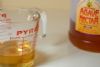
Read the Label: The 411 on Olive Oil
Have you taken a look at your olive oil label lately? Cold-pressed, organic, light olive oil. Extra-virgin olive oil. Expeller-pressed organic oil. What do all those terms mean?
The folks at Gourmè Mist, a line of oil and vinegar spritzers, shared a glossary of oil terms with us.
Oils Defined
Ever wonder about the difference between expeller pressed or cold pressed oil? Or how about organic oil versus natural oil? Well, there is no longer a need to wonder, we are here to clarify those sometimes confusing terms you find on the label.
Expeller Pressed - Chemical free, mechanical extraction of oils from nuts or seeds. No outside heat is added, however, the harder the nut or seed the more friction is created and the hotter the process.
Cold Pressed - Expeller pressed in a temperature controlled environment. Temperatures are controlled to stay below 120 degrees F. This method is used on more delicate oils to help retain flavor.
Organic Oil - Must contain at least 95% organic ingredients. This means the ingredients were grown without conventional pesticides or artificial fertilizers. Additionally, the organic manufacturer can become certified and use the USDA seal.
Natural Oil - Nothing artificial added (there is still controversy on the definition of artificial). Our recommendation is to look at the label to make sure the ingredients are familiar, such as just olive oil in olive oil.
Virgin vs. Extra Virgin, what’s the difference?
Extra-Virgin Olive Oil - is made by the first pressing of the olive fruit using the cold pressing process and has less tha 1% acidity. Extra-virgin oils are typically more expensive and with their rich flavor should be saved for enjoying right out of the bottle.
Virgin Olive Oil - is made using riper olives and is also cold pressed. It is a low-grade extra-virgin olive oil and has a higher acidity of 1 1/2%. This oil is better used in cooking.
Refined Olive Oil - is refined virgin olive oil and is tasteless. The acidity level is higher than 3.3%.
Pure Olive Oil or Olive Oil - is made from the second cold pressing or chemical extraction. It is lighter in color and taste than virgin and is considered an all purpose olive oil.
Light and Extra Light Olive Oil - is a mixture of refined olive oils made from the lowest quality olive oils through chemical processing. The term “light” does not refer to the calories.
Gourmè Mist's pure and imported oils and vinegars come in six varieties: organic extra virgin olive oil, organic canola oil, natural extra virgin olive oil, Barrel Aged Balsamic Vinegar of Modena, Balsamic Vinegar of Modena infused with pomegranate, and Balsamic Vinegar of Modena infused with raspberry.
What kind of oil do you use at home?
The folks at Gourmè Mist, a line of oil and vinegar spritzers, shared a glossary of oil terms with us.
Oils Defined
Ever wonder about the difference between expeller pressed or cold pressed oil? Or how about organic oil versus natural oil? Well, there is no longer a need to wonder, we are here to clarify those sometimes confusing terms you find on the label.
Expeller Pressed - Chemical free, mechanical extraction of oils from nuts or seeds. No outside heat is added, however, the harder the nut or seed the more friction is created and the hotter the process.
Cold Pressed - Expeller pressed in a temperature controlled environment. Temperatures are controlled to stay below 120 degrees F. This method is used on more delicate oils to help retain flavor.
Organic Oil - Must contain at least 95% organic ingredients. This means the ingredients were grown without conventional pesticides or artificial fertilizers. Additionally, the organic manufacturer can become certified and use the USDA seal.
Natural Oil - Nothing artificial added (there is still controversy on the definition of artificial). Our recommendation is to look at the label to make sure the ingredients are familiar, such as just olive oil in olive oil.
Virgin vs. Extra Virgin, what’s the difference?
Extra-Virgin Olive Oil - is made by the first pressing of the olive fruit using the cold pressing process and has less tha 1% acidity. Extra-virgin oils are typically more expensive and with their rich flavor should be saved for enjoying right out of the bottle.
Virgin Olive Oil - is made using riper olives and is also cold pressed. It is a low-grade extra-virgin olive oil and has a higher acidity of 1 1/2%. This oil is better used in cooking.
Refined Olive Oil - is refined virgin olive oil and is tasteless. The acidity level is higher than 3.3%.
Pure Olive Oil or Olive Oil - is made from the second cold pressing or chemical extraction. It is lighter in color and taste than virgin and is considered an all purpose olive oil.
Light and Extra Light Olive Oil - is a mixture of refined olive oils made from the lowest quality olive oils through chemical processing. The term “light” does not refer to the calories.
Gourmè Mist's pure and imported oils and vinegars come in six varieties: organic extra virgin olive oil, organic canola oil, natural extra virgin olive oil, Barrel Aged Balsamic Vinegar of Modena, Balsamic Vinegar of Modena infused with pomegranate, and Balsamic Vinegar of Modena infused with raspberry.
What kind of oil do you use at home?
![]() You will earn 3 SparkPoints |
NEXT ENTRY > We are a SparkPeople Family


.jpg)


Comments
Found on http://www.braintherapy.com/canola.
htm - 2/19/2009 8:31:29 PM
www.ithyroid.com/canola_oil.htm - 2/19/2009 7:23:06 PM
I think if anyone really is concerned about their health they should google "where does canola oil come from" or any other catch phrase and find out for themselves. I don't think they should take my word or anyone elses. Canola oil is controversial and opinions differ. Find out the facts for yourself, then there is no confusion. - 2/19/2009 2:54:31 PM
It is important not to use high heat with any kind of olive oil. It changes the chemical composition and it becomes toxic. So, I use grape seed, coconut, peanut or palm oils for high heat cooking like stir frying. They are all healthy oils. For years coconut, peanut and palm oils were given a bad rap. I have always believed it was political and about money. Hydrogenated fat was so much cheaper. So, I just kept using them anyway and I have been using them since the seventies. My husband and myself are in our late fifties and neither one of us struggle with bad cholesterol, heart problems or high blood pressure, even though on my husbands side there is a great history of heart disease. I have to believe that using these healthy oils have helped. Also, research is now coming out in the main media proclaiming benefits to coconut, peanut and palm oils.
I have always been very strict about staying away from vegetable, hydrogenated and canola oil. Canola oil is derived from rape seed and is chemically altered in the processing. It is as harmful to us as hydrogenated fats are.
I hope I don't sound like a "know it all". But, I have been researching this stuff since I was in high school, as well as listening to information on oils from a long list of alternative care providers since the early seventies. Like I said, it has paid off with our health as far as our good veins, good cholesterol readings and no heart problems for our age. You can google and research this info.
- 2/18/2009 8:41:11 PM
The article missed one distinction. High quality extra virgin olive oil should be "first cold pressed". But, I have seen some brands of EVOO that are not first cold pressed. You have to read the label carefully. Some manufacturers will try to fool you.
I pay extra for olive oil that has been first cold pressed. there are some really wonderful artisan brands that aren't organic. Whole Foods has a wonderful selection of imported olive oils at reasonable prices. I've tried from great olive oils from Italy, Spain and Greece.
- 2/16/2009 12:50:52 PM
A little bit of EVOO goes a long way, which is another thing I like about it. It may be more expensive per ounce, but I find that I use a lot less of it which helps my pocket book, my taste buds, and my waistline! - 2/16/2009 12:33:10 PM
Please Log In To Leave A Comment: Log in now ›