|
Circuit training is a workout routine that combines cardiovascular fitness and resistance training. It was first proposed in the late 1950s as a method to develop general fitness. The initial routines were arranged in a circle, alternating between different muscle groups (hence the name circuit training). By allowing only a short rest interval of 30-90 seconds between stations, cardiovascular fitness is gained along with the benefits of resistance training.
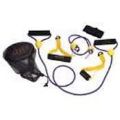
When developing a circuit training routine, a wide variety of exercises and equipment can be utilized. Much of the equipment is relatively inexpensive and includes surgical tubing, jump rope, your own body weight, dumbbells, medicine balls, physioballs and weight training machines. A circuit can consist of as few as six stations to as many as 15 stations based on the goals and pre-training levels of the participants.
Circuit training stations are generally sequenced in a way to alternate between muscle groups, which allows for adequate recovery. The rest interval between stations should be between 30-90 seconds and 1-3 minutes between circuits. A typical gym has several strength training machines and workstations, which enables the creation of several circuits. This benefit of variability challenges the skills of the participant and keeps them interested from session to session.
Circuit training plays an integral role in the offseason workouts of many professional athletes. It serves as a way to maintain general fitness while avoiding the high physical demands of in-season sport. Circuit training also serves as a segue to higher level strengthening programs in these athletes.
The following circuits are examples that can be used by the participant with several years of weight training experience. The cornerstones of these circuits are exercises that stress multitude and core musculature. A participant should always consult with a physician before beginning a fitness program.
Check out two circuits for both the beginner, intermediate and advanced levels at the 30-Minute Workouts page.
| 


.jpg)