It appears you have not yet registered for SparkPeople. To get a free nutrition and fitness plan and join our community click here....

Fitness Articles     |    SparkPeople Workouts

PRINT Share
Add This to My SparkFavorites
SparkPeople Sponsors help keep the site free!
 

Walking Workouts with Intervals

Training Programs for Beginner, Intermediate, and Advanced Walkers

-- By Nicole Nichols, Fitness Instructor
SparkPeople Sponsors help keep the site free!
This walking program uses intervals (short bursts of higher-intensity activity followed by lower intensity recovery periods), which can be a more effective way to train (and burn calories) than exercising at one intensity level. If you're new to walking or exercise, start with the Beginner program. As you progress, slowly increase your time and eventually move to the Intermediate and Advanced workouts. Because this is a general program, you may need to adjust the recommended speeds, intensities, and times to suit your fitness level. Be sure to refer to our Walking Guide for more information and resources for walkers.

Getting Started
Use the FIT (Frequency, Intensity and Time) Principles for a safe and effective workout!
  • Frequency: Try the walking workout listed three to five times per week, depending on your fitness level. Beginners should do fewer days, while intermediate to advanced walkers can safely do more.
  • Intensity: Walk at a brisk—not leisurely—pace. Don’t worry about what your pace really is, but do pay attention to your overall intensity, aiming for 5-7 on a scale of 1-10. You’ll find a full explanation of the 1-10 Intensity Scale (known as RPE) below the workouts.
  • Time: Try to follow the suggested workout guidelines to the best of your ability, which means that you'll gradually increase your walk time as you progress from the beginner to the intermediate and advanced interval workouts.
And remember, always warm up and cool down. Warming up at a slow pace will help prepare your joints, muscles and heart for exercise. Cooling down will prepare your body to return to a resting state, help prevent muscle soreness, and prevent illness and injury.

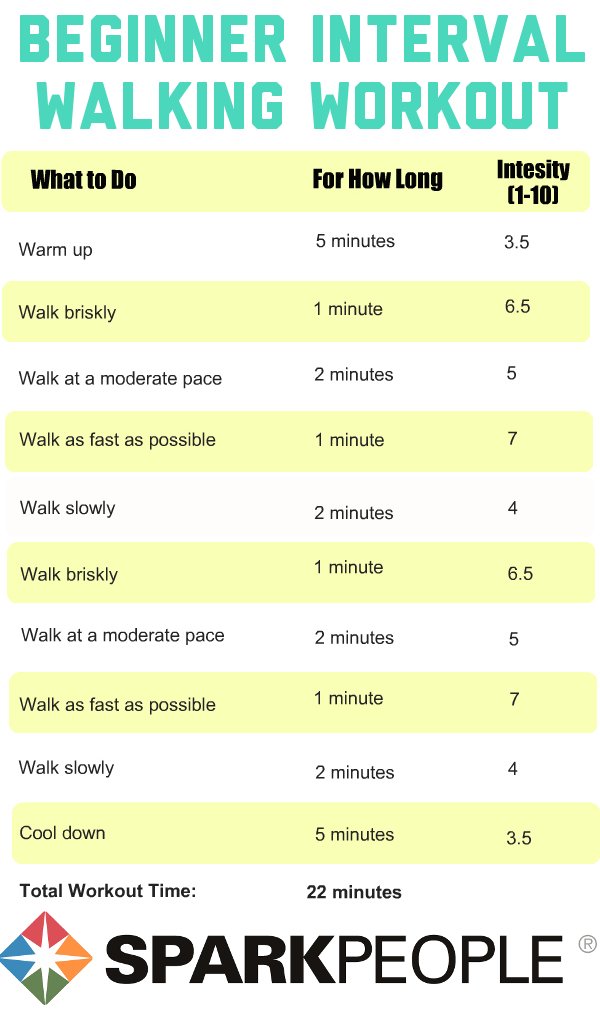
Beginner Interval Program
 What to do  For how long  Intensity (1-10)
 Warm up
 5 minutes  3.5
 Walk briskly
 1 minute  6.5
 Walk at a moderate pace
 2 minutes  5
 Walk as fast as possible  1 minute  7
 Walk slowly  2 minutes  4
 Walk briskly
 1 minute  6.5
 Walk at a moderate pace  2 minutes  5
 Walk as fast as possible  1 minute  7
 Walk slowly
 2 minutes  4
 Cool down
 5 minutes  3.5
 Total Workout Time:  22 minutes  

Intermediate Interval Program
 What to do  For how long  Intensity (1-10)
 Warm up  5 minutes  3.5
 Walk briskly
 1 minute  6.5
 Walk at a moderate pace  2 minutes  5
 Walk as fast as possible  1 minute  7
 Walk slowly  2 minutes  4
 Walk briskly  1 minute  6.5
 Walk at a moderate pace  2 minutes  5
 Walk as fast as possible  1 minute  7
 Walk slowly  2 minutes  4
 Walk briskly  1 minute  6.5
 Walk at a moderate pace  2 minutes  5
 Walk as fast as possible  1 minute  7
 Walk slowly  2 minutes  4
 Walk briskly  1 minute  6.5
 Walk at a moderate pace  2 minutes  5
 Walk as fast as possible  1 minute  7
 Walk slowly  2 minutes  4
 Cool down  5 minutes  3.5
 Total Workout Time:  34 minutes  

Advanced Interval Program
 What to do  For how long  Intensity (1-10)
 Warm up  5 minutes  3.5
 Walk briskly  1 minute  6.5
 Walk at a moderate pace  2 minutes  5
 Walk as fast as possible  1 minute  7
 Walk slowly  2 minutes  4
 Walk briskly  1 minute  6.5
 Walk at a moderate pace  2 minutes  5
 Walk as fast as possible  1 minute  7
 Walk slowly  2 minutes  4
 Walk briskly  1 minute  6.5
 Walk at a moderate pace  2 minutes  5
 Walk as fast as possible  1 minute  7
 Walk slowly  2 minutes  4
 Walk briskly  1 minute  6.5
 Walk at a moderate pace  2 minutes  5
 Walk as fast as possible  1 minute  7
 Walk slowly  2 minutes  4
 Walk briskly  1 minute  6.5
 Walk at a moderate pace  2 minutes  5
 Walk as fast as possible  1 minute  7
 Walk slowly  2 minutes  4
 Walk briskly  1 minute  6.5
 Walk at a moderate pace  2 minutes  5
 Walk as fast as possible  1 minute  7
 Walk slowly  2 minutes  4
 Cool down  5 minutes  3.5
 Total Workout Time:  46 minutes  

An Explanation of Using the RPE Method to Measure Intensity

Rate of Perceived Exertion (RPE) may be the most versatile method to measure exercise intensity for all age groups. Using this method is simple, because all you have to do is estimate how hard you feel like you’re exerting yourself during exercise. RPE is a good measure of intensity because it is individualized—it’s based on your current fitness level and overall perception of exercise. The scale ranges from 1 to 10, allowing you to rate how you feel physically and mentally at a given intensity level.
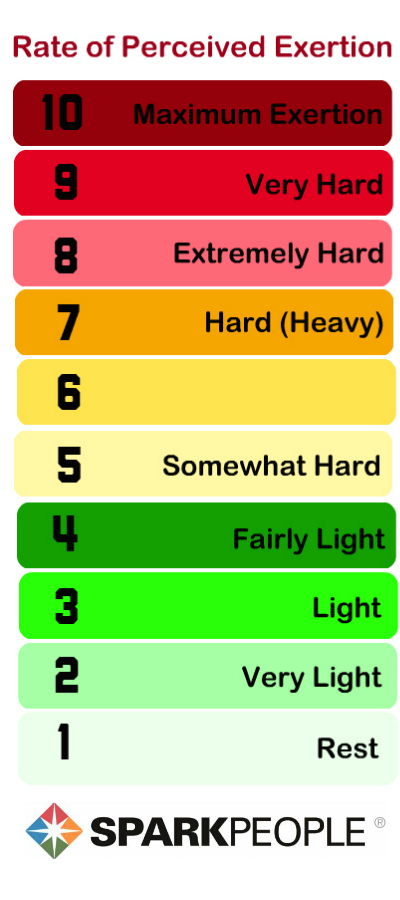
10 Maximum exertion
9 Very hard
8 Extremely hard
7 Hard (heavy)
6  
5 Somewhat hard
4 Fairly light
3 Light
2 Very light
1 Rest

An RPE between 5 and 7 is recommended for most adults. This means that at the height of your workout, you should feel you are working "somewhat hard" to "hard."
Page 1 of 1         Return to Main fitness Page >

PRINT Share
Add This to My SparkFavorites
  Click here to to redeem your SparkPoints
  You will earn 3 SparkPoints


Related Content


About The Author
Nicole Nichols Nicole Nichols
With a bachelor's degree in health promotion and several fitness certifications, Nicole enjoys teaching Spinning and Pilates classes and living a healthy, eco-friendly lifestyle. See all of Nicole's articles.


Member Comments About This Article
See All 10  |  Leave A Comment


Today On SparkPeople
Featured Article
SparkPeople's 500-Calorie Thanksgiving Feast

80% of SparkPeople members try to cook healthier versions of holiday favorites, according to a recent poll. Eat better this Turkey Day with these nine exclusive recipes that are BIG on taste and tradition but low in calories.

Read More
MessageBoard Hot Topics
Top Searches
Modified Pushups on Foam Roller
This Pilates-style pushup is great for the triceps!
Featured Recipe
Chef Meg's Zucchini Muffins
Submitted By: CHEF_MEG

These muffins are very filling!

The whole wheat flour makes for a dense muffin, which I like. You only need to eat one! If you want a lighter muffin try using whole wheat pastry flour, which is more finely ground and available in the bulk bins at larger grocery stores.

See This Recipe on SparkRecipes
Activity Stats
  • Calories Burned: 6,934,154,325
  • Pounds Lost: 9,211,625
  • Cups Water Drank: 213,119,229
  • SparkAmerica Minutes: 940,863,020
Join SparkPeople For Free!
Get a personalized diet and fitness plan, great newsletters, post to our message boards, and even your own personal SparkPage!

Join Now For Free!