|
Want to run longer? This program will help increase your endurance. If you're new to running or exercise, start with the Beginner program. As you progress, slowly increase your time and eventually move to the Intermediate and Advanced workouts. Because this is a general program, you may need to adjust the recommended speeds, intensities, and times to suit your fitness level. If you have access to a treadmill, focus on the pace guidelines (left column), working at your own intensity level. If you run outdoors and do not have access to any tools to measure your pace, then use the intensity guidelines (right column) as a guide for how fast or slow to run. (Find a full explanation of exercise intensity below the workouts.) Beginner Endurance Program
Intermediate Endurance Program
Advanced Endurance Program
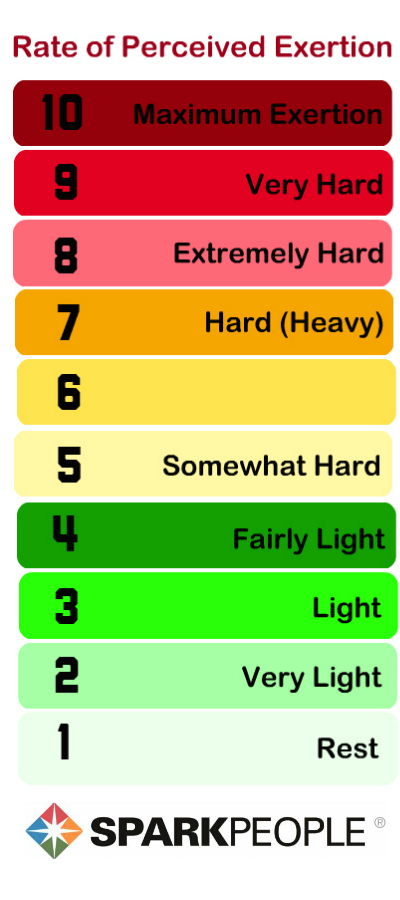
An Explanation of Using the RPE Method to Measure Intensity Rate of Perceived Exertion (RPE) may be the most versatile method to measure exercise intensity for all age groups. Using this method is simple, because all you have to do is estimate how hard you feel like you’re exerting yourself during exercise. RPE is a good measure of intensity because it is individualized—it’s based on your current fitness level and overall perception of exercise. The scale ranges from 1 to 10, allowing you to rate how you feel physically and mentally at a given intensity level. ![]() |


Jen Mueller


Member Comments
Thanks Coach Jenn! - 1/17/2013 7:09:27 AM
I am not a distance runner - I prefer lifting weights and HIIT. But when I do run distance a pace of 6.3 MPH is a very slow pace for me to maintain for even an hour. On a good day I can run 30% faster than this and only be a bit uncomfortable.
It's all about what you set out to achieve by doing cardio. If you read a book/watch tv on a treadmill in order to burn calories then you are not improving your heart and lungs. In fact your not even burning many calories
It's only if you increase running intensity..week in..week out, that your heart and lungs improve.
I would suggest that if you have been using a treadmill or been running for over six months and you're not more than 20 pounds over weight then unless you can do the intermediate routine with ease then reflect on your exercise programme. - 1/10/2013 2:41:57 PM
But seriously, folks, it's not that bad. She's not telling people they have to start out running at high speeds... especially if you don't have a treadmill (and how many beginners have that kind of equipment?) you aren't likely to be able to keep track of your speed very well.
I've been working on intervals to try to become a jogger, if not a runner, and I'm going to have to say that my perceived exertion of 3.5--where beginners warm up--would be a fairly casual walk. If I don't pay attention to the speed (since I don't have a treadmill) then I would be able to follow this beginner program, basing it all on my perceptions. I know that I can jog about a quarter mile, sometimes a little longer, before I need to slow down for a few minutes... and when I do a mile of intervals, it averages out to about 14 minutes per mile. That's faster than 4 MPH!
That being said, this does mean that I don't keep up the speeds or perceived exertions for the length of time that is suggested here... but that is the sort of thing I'm working toward. - 1/10/2013 2:20:10 PM
Even "advanced" needs some clarification. If you are able to hold the top speed 6.3 (or 9:30 min/mile), for an entire 5K, your time would be 29:30. That's very good if you're a senior citizen like me, or somewhere along your healthy living journey, but in any 5K race, you would not be considered an "advanced" runner.
We all compete against ourselves in the end. Use these charts accordingly. - 1/10/2013 1:05:27 PM