|
My late maternal grandmother was the kind of grandmother who set the bar. She could whip up an outfit for me on her sewing machine in less than a day. Her cookie jar was always stocked with homemade chocolate chip cookies. And of course, her grammar was superb. She did have one habit though that annoyed me to no end. If ever I expressed a liking for something she owned, like a vase, a bowl, or a piece of furniture, she grab a blank sticker, write my name on it, and stick it to the item. “There,” she’d say, “now you can be sure you’ll get it after I die.” The last thing I wanted to think about was her not being around anymore. A few years ago that’s what happened though, and I wound up with a Griswold skillet and Dutch oven—my grandma's cast-iron cookware that I later learned were highly sought-after collectibles. But there’s no way I’d ever sell these family heirlooms, because besides being sentimental, they’re also one of the healthiest types of cookware available. If you’re searching for the perfect cookware, or worried about the health hazards you've heard about aluminum or Teflon, check out this list of pros, cons and real facts about the many types of cookware on the market. 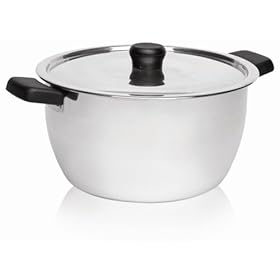 Aluminum cookware and bakeware is made of cast or sheet aluminum. Aluminum cookware and bakeware is made of cast or sheet aluminum.Pros: Inexpensive, lightweight, good thermal conductivity, doesn’t rust, corrosion resistant. Cons: Can be reactive, especially with acidic foods, changing the taste of the food. Fact: Claims have been made linking aluminum to Alzheimer’s disease and other health problems, but these claims have been unsubstantiated by scientific research. In fact, according to the FDA, taking one antacid or aspirin tablet provides the body with far more aluminum than cooking and storing an entire day’s meals in aluminum. Tip: If you’re set on aluminum cookware, only use it if it’s in good condition, never use it for food storage, and avoid using it to cook foods that are acidic or salty (such as tomato sauce or salad dressing). 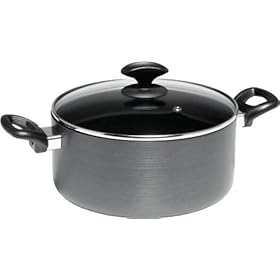 Anodized aluminum cookware is treated to develop an aluminum oxide coating on the surface. Anodized aluminum cookware is treated to develop an aluminum oxide coating on the surface.Pros: This coating is extremely hard and nonreactive, which means that aluminum won’t leach into foods (if that concerns you), even those that are acidic or salty. Cons: May require special cleaning and cooking techniques, specified by the manufacturer. 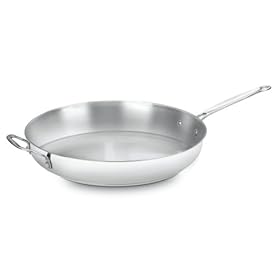 Stainless steel is made mostly of steel, but this type of cookware also contains small amounts of chromium and nickel, which make it corrosion resistant. Widely considered to be the best composition is 18/10 (18 parts chromium and 10 parts nickel). Stainless steel is made mostly of steel, but this type of cookware also contains small amounts of chromium and nickel, which make it corrosion resistant. Widely considered to be the best composition is 18/10 (18 parts chromium and 10 parts nickel).Pros: Sturdy, easy to clean Cons: When scratched or worn, the chromium and/or nickel may leach into food, causing negative health effects. Tips: Use only nonabrasive materials to clean stainless steel pots and pans. Abrasive cleaning can release small amounts of chromium and nickel. Never use scouring pads or harsh abrasives to clean stainless steel. Soaking the pan in a mixture of baking soda and warm water is a better alternative. 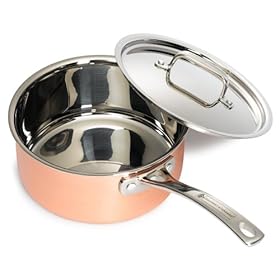 Copper pots with stainless steel lining have a copper exterior and stainless steel interior. Copper pots with stainless steel lining have a copper exterior and stainless steel interior.Pros: Excellent thermal conductivity and safe interior Con: The copper requires more care, and these pots aren't recommended if you have a ceramic cook top. Tips: Never use unlined copper cookware, or lined copper cookware in which the lining is scratched or worn, as this may lead to copper toxicity. 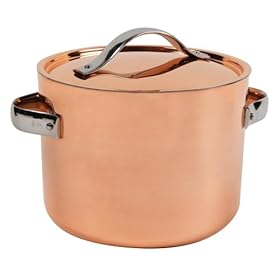 Copper cookware has a coating to prevent copper from coming into contact with food. Copper cookware has a coating to prevent copper from coming into contact with food.Pro: Excellent thermal properties for even heating Cons: The protective coating can be dissolved by foods (especially acidic ones) over time, allowing the copper itself to come into contact with food, which can lead to copper toxicity. To prevent this, use only nonabrasive cleaning materials and techniques and get rid of worn copper cookware. These pots aren't recommended if you have a ceramic cook top. 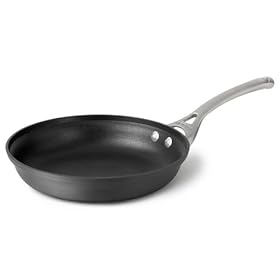 Teflon and Silverstone are popular thanks to their nonstick finishes. Teflon and Silverstone are popular thanks to their nonstick finishes.Pros: Nonstick, easy to clean, good for low-fat cooking because additional oil isn't necessary to prevent sticking Cons: There have been reports that the non-stick Teflon coating is potentially harmful to people's health, especially when the Teflon is cracked or scratched. Fact: Actually, the one known danger of Teflon is overheating. It begins to breakdown at about 500 degrees Fahrenheit, at which point it becomes unsafe to breathe, resulting in flu-like symptoms, like headache, fever, chills, and cough. Interestingly, birds are extremely susceptible to the fumes, so if you’re going to melt your Teflon frying pan on the stovetop, make sure your pet canary is a safe distance away. Tips: Use with only plastic or wooden utensils, and nonabrasive cleaning tools and methods, to preserve the nonstick finish. Avoid overheating.  Cast Iron is classic cookware that lasts a lifetime. Cast Iron is classic cookware that lasts a lifetime.Pros: Heats evenly, naturally nonstick, can go from oven to stovetop, can double the iron in your foods, inexpensive. Cons: Requires special care including gentle cleaning and periodic reseasoning to maintain the stick-resistant surface. 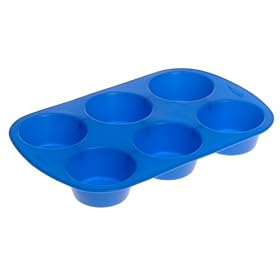 Silicone bakeware is a man-made blend of oxygen and sand. Silicone bakeware is a man-made blend of oxygen and sand.Pros: Safe (if of good quality), non-reactive, non-stick, easy to clean. Cons: Expensive, poor heat-conduction. 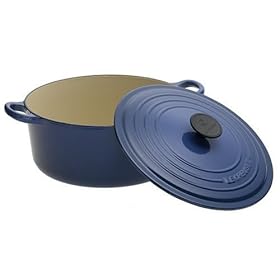 Enameled bakeware and cookware is made of pottery or cast iron that is coated with layered fused glass. Enameled bakeware and cookware is made of pottery or cast iron that is coated with layered fused glass.Pros: Non-reactive, safe and can go from stovetop to oven to refrigerator to freezer. Con: Expensive and should be hand washed. Tip: Buy only quality enameled pieces, and they will last a lifetime 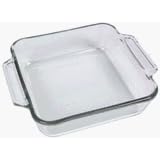 Glass cookware and bakeware can be clear or tinted. Glass cookware and bakeware can be clear or tinted.Pros: Extremely safe, inexpensive and easy to clean. Cons: Uneven heat conduction, can break easily. 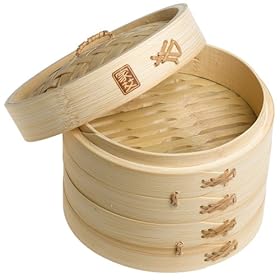 Bamboo steamers and cooking utensils are made of renewable bamboo. Bamboo steamers and cooking utensils are made of renewable bamboo.Pros: Nonreactive, dishwasher safe, and earth-friendly. Cons: Limited selection of items So what’s the perfect material for cookware? It all depends on your personal specifications and preferences. I’m obviously partial to my cast-iron pieces, but you might find it’s not for you. With a little experimentation, you’ll surely find a set you’re happy with or, as my grandmother would have said, “a set with which you are happy.” This article has been reviewed and approved by SparkPeople healthy eating expert, Tanya Jolliffe. |




.jpg)